
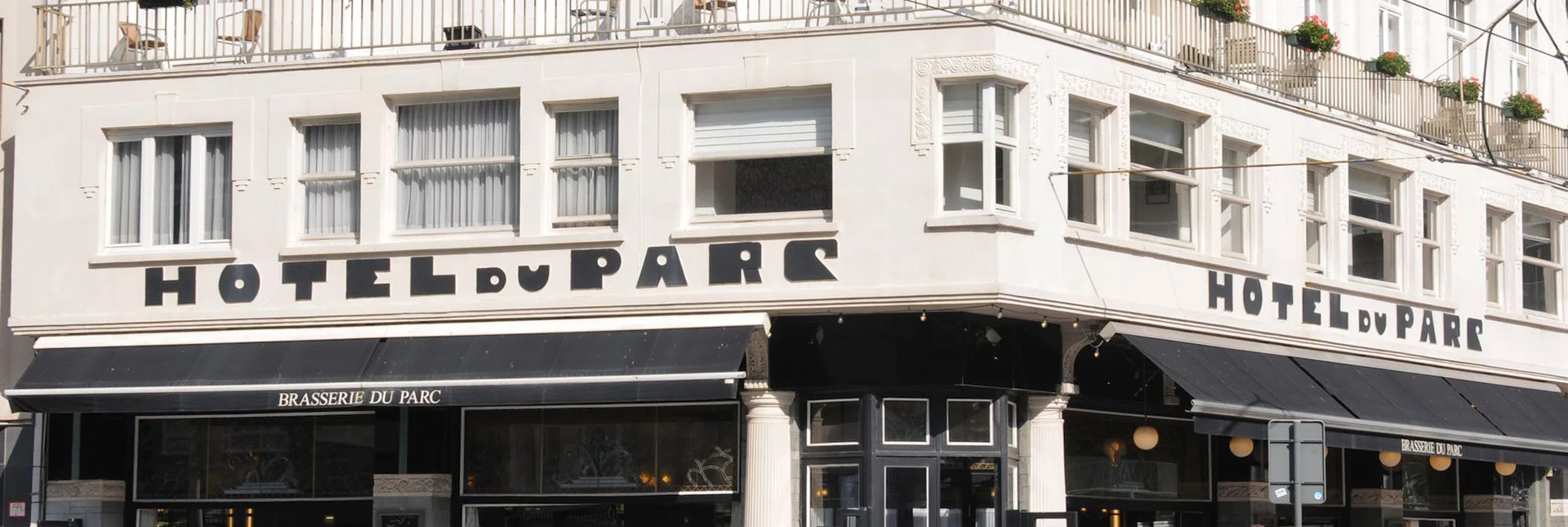
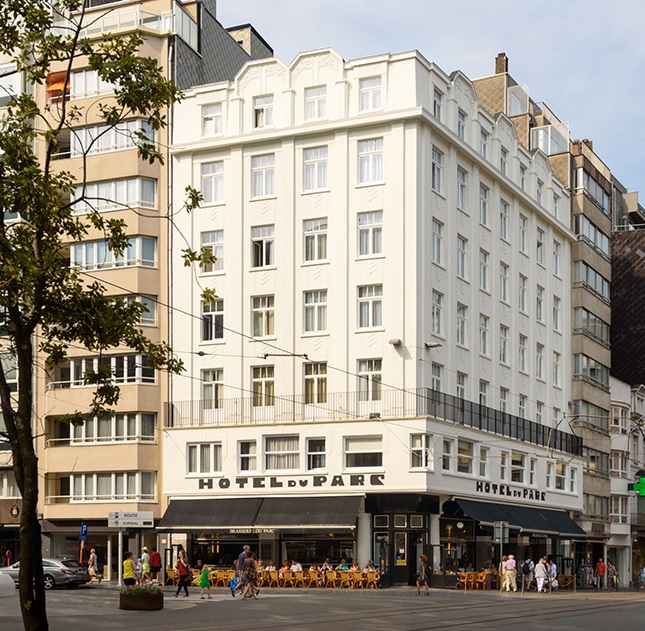
When in 1926 Victor and Maria Libert-Lefebvre became the owners of the corner building on the square of Marie-José / Leopold II Avenue - already known as Hotel du Parc - they could not have suspected that they would become the founders of a unique historical monument.
The story
This is the story of Brasserie du Parc, that starts in the 1920s.

1926: Victor and Maria Libert-Lefebvre become owners
1929-’30: Renovation
Around 1929-'30, as enthusiastic manager-owners, they took the decision to rebuild and thoroughly renovate the establishment.
Architect Joseph Van der Banck, friend of the house, was called upon. Together with the construction company Versluys, at the time located in Bredene, and the renowned furniture and decoration company of the De Coene brothers, namely 'De Kortrijkse Kunstwerkstede', the building was subjected to a true metamorphosis.
The facade of the hotel was given a sleek Art Deco look, while the refinement of the interior of the brasserie can best be described as a collective work of art. Glass windows, lighting, furniture, tile floors, mirrors, ceiling reliefs... anyone looking around attentively will notice that the materials that were used, every motif, every detail, refers to the Art Deco style.
Did you know that the opaque black glass on the facade, called « marbrite », is an invention of the Belgian Arthur Brancart (1870-1934) who manufactured it starting in the 1920s in the then world-renowned "Verreries de Fauquez"?
1930 - 1983
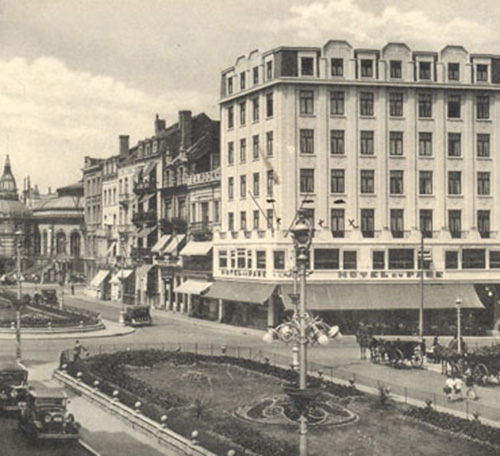
The Interwar period marked a period of prosperity for the mundane spa town. The outbreak of WWII would put an abrupt end to that. The Hotel du Parc became one of three hotels in Ostend to be claimed by the German occupiers. It was set up as a Kommandantur. The years of war are a dark page in the history of the majestic building. Yet our story features a romantic moment when, during an air raid, the Libert family takes shelter in the cellars of the hotel and daughter Fernande meets her future husband, the doctor Pierre Vincke, whom she marries in 1946.
After the war, when peace was restored, tourism gradually revived in the coastal town of Ostend. But then, in 1950, disaster struck. Victor Libert died unexpectedly. Shortly thereafter, widow Maria Libert-Lefebvre and son Henri decided to end the hectic life and demanding labor of running the business. The management of the Hotel-Brasserie du Parc was in the hands of the Blontrock family for more than 30 years.
1983: du Parc returns to family hands
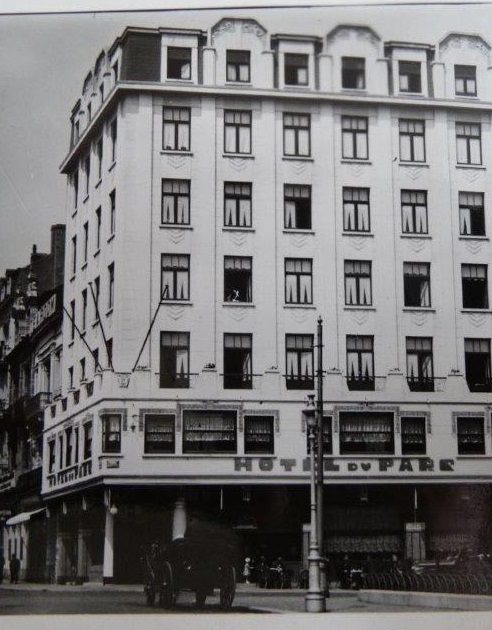
In 1983, Pierre and Fernande Vincke-Libert seized the opportunity to make "du Parc" a family business again. The management comes into the hands of three of their children: Pierre, Michèle and Christine. At that time, the complex was in urgent need of a major renovation/restoration. The hotel rooms were completely renovated in order to meet the requirements of modern comfort and fire protection. In the brasserie, the valuable interior needed to be addressed. Because the original had long been removed and a tap-stand with no personality disfigured the whole, in 1990 a new café-buffet was realized by the firm Ytor from Middelkerke, to a design of co-manager and inspirer Jean Janssen.
The level of quality and thoroughness with which the restoration assignment was carried out, resulted in the recognition by the many admirers and government agencies that this magnificent, unique Art Deco monument had to be saved from demolition. The protection became a fact when by Ministerial Decree of 27/01/2000, Hotel-Brasserie du Parc was classified because of its historical, artistic and socio-cultural value.
This recognition gave great courage to the only remaining managers of the brasserie, Jean and Christine Janssen-Vincke.
2016 - 2021
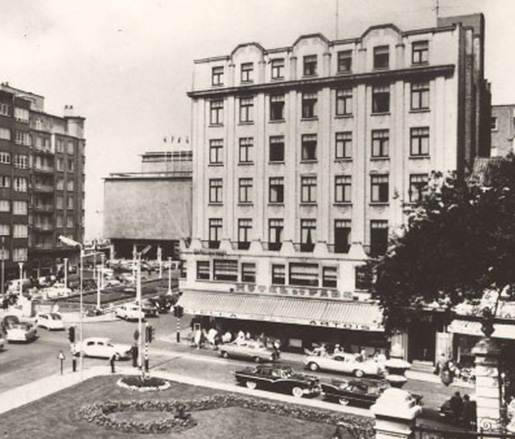
Anno 2016, the Brasserie du Parc was passed over and 5 years later the Vincke heirs sold the property to an investor, Group Linden.
Because of its casual atmosphere and artsy appearance, 'du Parc' is still the much favored spot for artists, businessmen and tourists alike, as well as the native 'Ostendenoare'.